Creative landscapes since 2018
(828) 699-0157
Guide
Pavers vs. Concrete vs. Natural Stone Patios
How the three main patio materials compare on looks, durability and, most importantly, what happens when something needs to be repaired.
By Blue Ridge Landscaping and Hardscaping · Updated November 2026
When you’re planning a patio, the first big decision is what it’s made of. We build all three main options, pavers, poured concrete and natural stone, and each one can look great. The real differences show up over time, especially when something needs to be fixed.
Pavers
“Pavers” is a general term for precast blocks. They come in a huge range of colors, sizes, shapes and patterns, from classic brick looks to large modern slabs.
- Repairs are simple. If a paver cracks, stains or a section settles, we can lift out just the pieces involved and set new ones in place. That makes pavers the most affordable patio to repair.
- Flexible design. Curves, borders, patterns and color blends are easy to work in.
- Joints. We usually fill joints with polymeric sand, which hardens to help lock the pavers in place, or another option you prefer.
Poured concrete
Poured concrete gives you a clean, continuous surface and works for patios of almost any shape.
- A solid, seamless look. There are no joints to maintain.
- Repairs are harder. Concrete is one piece. If it cracks or a section settles, the fix usually means cutting out and re-pouring that section, and new concrete rarely matches the old.
Natural stone
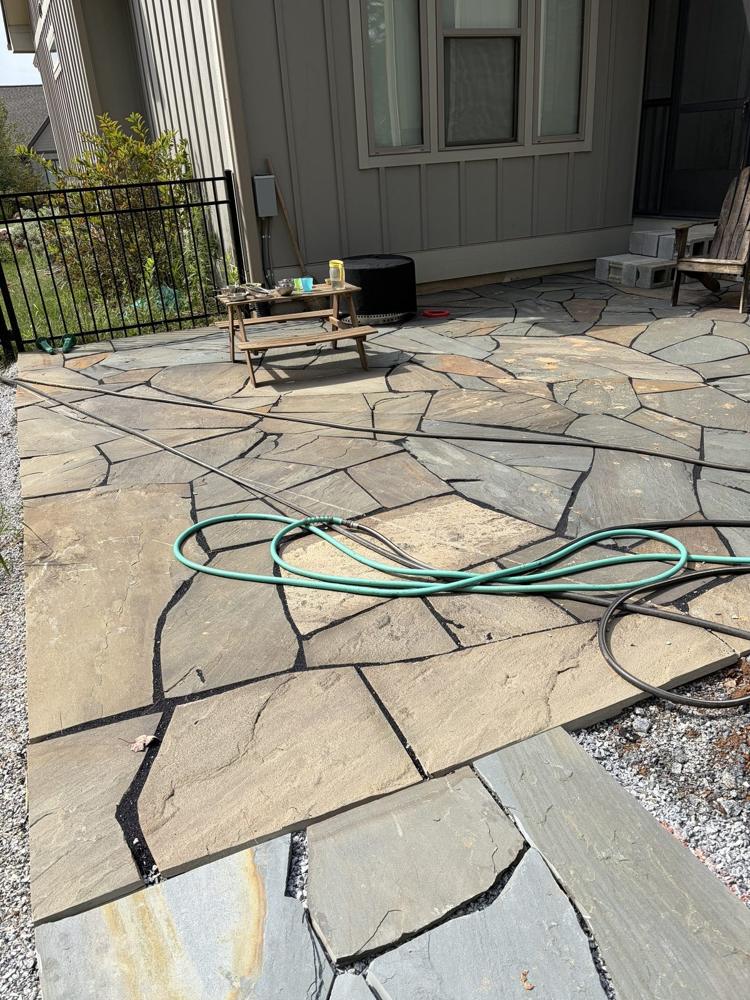
Natural stone like Pennsylvania bluestone and Tennessee flagstone gives you a one-of-a-kind look that fits mountain homes especially well.
- Unique character. No two stones are alike, and natural stone ages beautifully.
- Repairs are possible, but trickier. A broken stone can be replaced, but finding a piece that matches in size, color and thickness takes more work than swapping a paver.
Why we recommend pavers for most homeowners
All three materials can last for many years on a properly built base. But over the life of a patio, things happen. A heavy pot gets dropped, a tree root pushes up a corner, or a small area settles. With pavers, those fixes are quick and affordable because individual pieces can be replaced. That’s why pavers are our top recommendation for most patios, walkways and even driveways.
The base matters more than the material
Whatever you choose, what’s under the patio decides how long it stays level. Every patio we build sits on geotextile fabric, about 4 inches of 3/4″ washed stone and a 1-inch leveling layer. See exactly how it works in our guide to what goes under a patio.
Driveways too
Anything we can build as a patio, we can build as a driveway. The difference is thickness. Driveways use thicker pavers or stone to carry the weight of vehicles.
Every patio we build is backed by a 10-year warranty covering settling and shifting. It doesn’t cover damage from dropped items that break stones, but with pavers, a broken piece is an easy fix. See our custom patios page or call (828) 699-0157.
Ready to talk about your project?
Veteran owned and operated · BBB accredited · Licensed, insured & bonded · Free estimates